


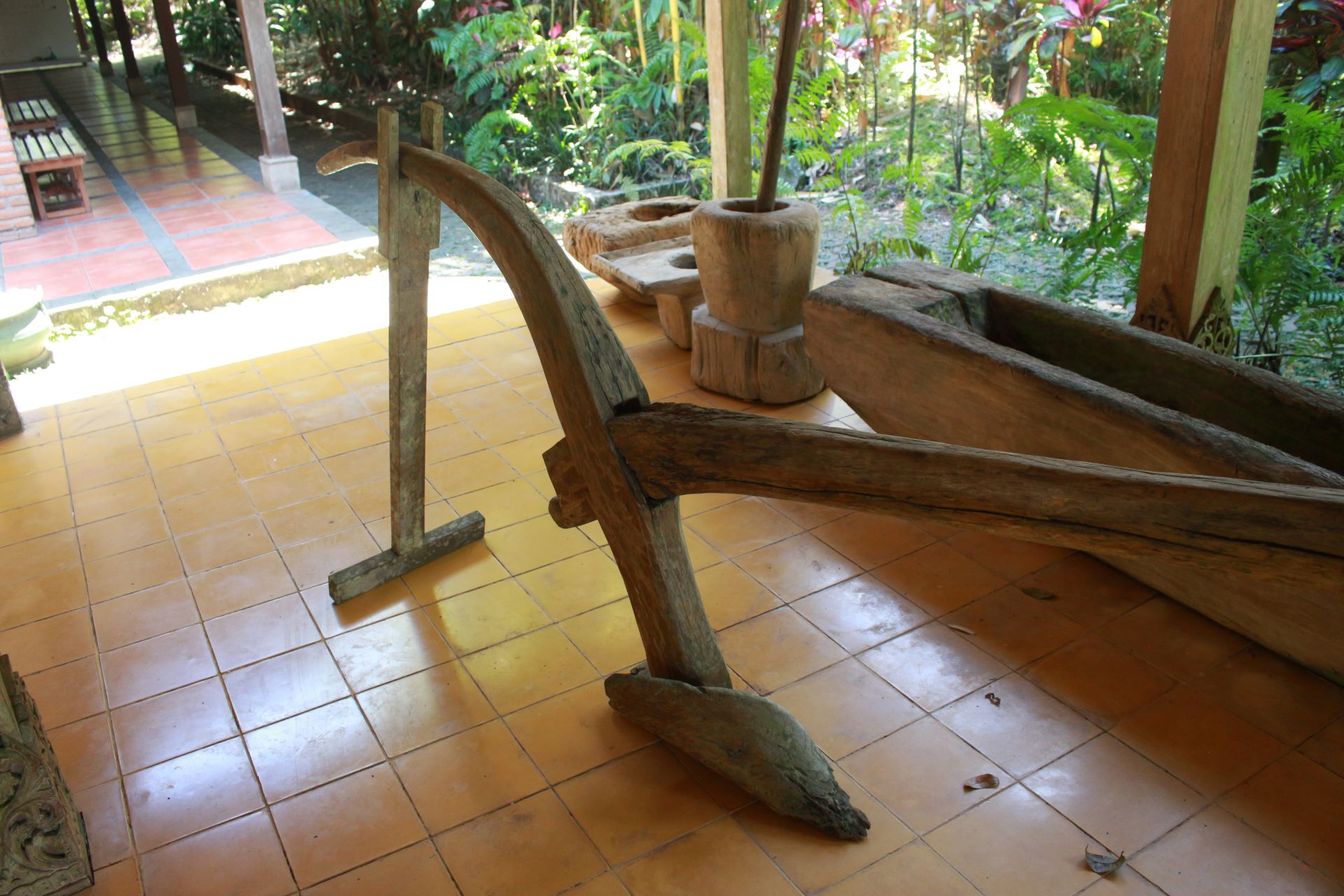
Plow
Luku & The Philosophy of Sunan Kalijaga
Beginning a Life
The plow (also known as *luku* and *tenggala*) is a traditional agricultural tool used to loosen the soil before planting and sowing seeds. A plow is typically pulled by an ox or a water buffalo. Behind this animal-drawn plow lies the profound philosophical teaching of Sunan Kalijaga.
In Javanese, a plow is called *LUKU*. It originates from the words *LAKU* or *MLAKU*, meaning action or walking. This signifies that plowing a rice field is akin to someone embarking on a journey through life. Therefore, in undertaking this endeavor, one must adhere to several principles embodied in the parts of the *LUKU* (plow), namely *Cekelan*, *Pancadan*, *Tandhing*, *Singkal*, and *Kaijen*.
Parts of the Luku
-
Cekelan
HandleThe part of the *LUKU* or plow held by the operator. The meaning is that in every walk of life, we must have guiding principles to hold onto.
-
Pancadan
FootrestThe place where the feet press firmly so the plow can sink into the soil and turn it over when pulled. The meaning is that in navigating life, we must have a firm footing and strong principles in order to turn difficult situations into manageable ones.
-
Tandhing
PegUsed to strengthen the joints so they do not wobble. The meaning is that in life, we must be ready to *NANDHINGKE* (compare) or carefully weigh a situation before making a decision. If our deliberation is thorough and sound, our decision will be precise.
-
Singkal
Abbreviation of Sing Sugih Akal (Resourceful)Uniquely structured so that when operated, it turns and loosens the plowed soil. The meaning behind *Sing Sugih Akal* is that in navigating life, we must be resourceful and not easily give up. When faced with problems, we must think cleverly to solve them.
-
Kaijen
Moldboard BladeA moldboard blade made of iron/steel plate. *Kaijen* comes from the word *Ka-Ijen*, meaning The One. The meaning is that in living life, we must always remember The One—God Almighty.